
Edmonton Infill and Modern Architecture: What Is Changing the Streetscape
Edmonton's RS zoning allows up to 8 units on a standard interior lot. A February 2026 motion to cut that to 6 failed 8-4. Here is what that means for neighbourhoods, builders, and buyers.

On this pageShow
✅ Key Takeaways:
- RS zoning (Bylaw 20001, in force Jan 1, 2024) allows up to 8 units on a standard interior lot, no public hearing required
- A February 2026 motion to cap mid-block infill at 6 units was defeated 8-4 by Edmonton City Council
- Council did reduce the maximum building height from 10.5m to 9.5m, effective August 1, 2026
- 16,519 new dwelling units were approved in 2024, up 30% from 2023; garden suites alone jumped 200%
- Modern farmhouse is the dominant infill aesthetic; skinny homes on 25-foot lots are reshaping mature neighbourhoods
The Zoning Bylaw That Changed Everything
On January 1, 2024, Edmonton's Zoning Bylaw 20001 came into force. It was the first complete overhaul of the city's zoning framework in over 60 years. The core change: most residential lots can now accommodate infill housing as-of-right, without a separate public hearing or neighbourhood notification.
In the RS (Residential Small Scale) zone, which covers most mature neighbourhoods, density is governed by a simple formula: 75 square metres of site area per unit. On a standard interior lot of around 600 square metres, that works out to a maximum of 8 dwelling units. Secondary suites, garden suites, duplexes, and row housing all count toward that total.
The first full year under the new rules produced 16,519 new dwelling units approved city-wide, up 30% from 2023. Garden suites alone saw a 200% jump, with 435 approved in 2024. Row housing went from an average of 146 new units per year between 2019 and 2023 to 1,216 units in 2024.
The 2026 Debate: 8 Units or 6?
The density numbers triggered a political response. In early February 2026, Edmonton's Urban Planning Committee heard from dozens of residents on a proposal from administration to lower the mid-block cap in the RS zone from 8 to 6 units and to increase minimum lot area per unit. Supporters said the change would protect streetscape character in established neighbourhoods. Opponents, including housing advocates, argued that unit caps are a blunt instrument and that height and massing are the real design levers.
On February 17, 2026, Council voted 8-4 to defeat the cap reduction. The 8-unit maximum stays.
Council did act on height: in April 2026, it voted to reduce the maximum building height for RS infill from 10.5 metres to 9.5 metres, taking effect August 1, 2026. Buildings already permitted before that date are not affected.
The practical result: more density is still coming, but the buildings will be slightly shorter.
The Skinny Home Phenomenon
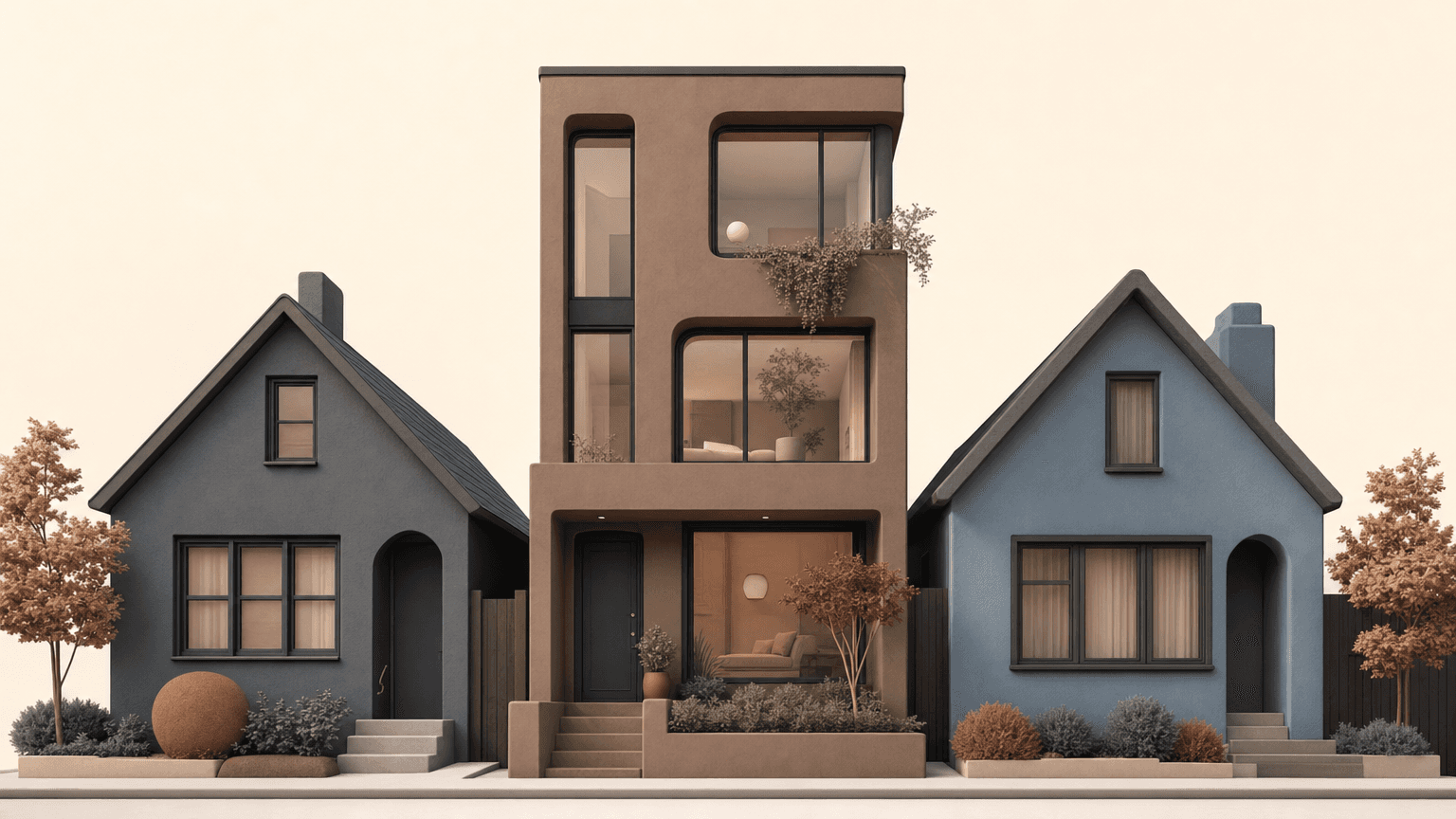
Edmonton is a national leader in narrow-lot infill. Builders subdivide older 50-foot lots into two 25-foot lots and construct two-storey homes side by side. The result: two modern homes where one bungalow stood.
This is most visible in Westmount, Glenora, Ritchie, and the inner-city river valley communities. A 1950s bungalow on a large lot gets purchased for land value, demolished, and replaced with two infill homes. The math works for builders because the combined sale price of two new homes well exceeds the cost of the original lot plus construction.
If you are buying in a mature neighbourhood, check the lot dimensions and zoning of adjacent properties. A neighbouring 50-foot lot is a candidate for subdivision.
Garden Suites: The Quiet Density Revolution
While skinny homes generate the most visible change to streetscapes, garden suites are reshaping backyards. A garden suite is a detached dwelling built in the rear yard of an existing residential lot. Under Bylaw 20001, they are permitted as-of-right in the RS zone.
The 435 garden suites approved in 2024 represent a 200% increase over 2023. Owners are adding them for rental income, multigenerational living, and as an offset against rising property taxes. For buyers, the presence of a garden suite on a neighbouring lot is worth checking before you purchase: it affects privacy and rear-yard character.
The Dominant Styles
Modern farmhouse is the most common aesthetic in new Edmonton infill: board-and-batten siding, black window frames, metal roof accents, steep gables. Builders like Kanvi Homes and Effect Home Builders use it across neighbourhoods like Grovenor and Highpark because it reads as contemporary but does not clash with older character homes on the same block.
Contemporary modern with flat or low-slope roofs, large windows, and dark cladding appears in higher-end custom builds, particularly in Crestwood and along the river valley. Urbis Infill Homes and Cambium Builders are active in this segment.
Transitional styles blend craftsman elements, covered porches and stone accents, with clean modern lines. This is the compromise style that tends to satisfy heritage-conscious neighbourhood associations while still delivering a new-build product.
 Edmonton neighbourhood aerial view
The Heritage Debate
Mature neighbourhood communities have pushed back on infill that disrupts street character. Garneau, Queen Alexandra, and Riverdale have active debates about compatible design standards. Edmonton's Heritage Conservation Program designates certain areas and structures for protection, but Bylaw 20001's density-first approach means heritage concerns are weighed against housing supply goals.
The Infill Development in Edmonton Association (IDEA) holds an annual symposium bringing together builders, city planners, and community stakeholders to work through these tensions. The November 2025 symposium focused on innovative solutions for mature neighbourhood integration.
Explore sustainable building practices in Edmonton
What This Means for Buyers
If you are buying in a mature Edmonton neighbourhood, expect infill construction on your street within the next several years. Before you start shopping, use our affordability calculator to confirm your maximum purchase price based on your income. That is not necessarily negative: new builds raise neighbourhood averages and bring younger families into aging communities. The streetscape will change.
Specific things to verify before buying:
- Adjacent lot dimensions. A 50-foot neighbour lot is a subdivision candidate.
- RS zoning details. The 8-unit cap applies to interior lots. Corner lots have different rules.
- Builder track record. Infill quality varies; check completed projects before you buy.
- Pending permits. The city's development permit database is public; search your prospective street.
⚠️ Watch Out: Buying an older bungalow in a mature neighbourhood? The lot next door could legally become 4 to 8 units under current rules. This is not necessarily bad for property values, but it does change the feel of the street. The February 2026 vote confirmed the 8-unit maximum stays.
Browse homes for sale in Edmonton
🎯 The Bottom Line: Edmonton's infill rules are settled for now. The 8-unit maximum survived a council vote in February 2026, and a modest height reduction to 9.5m takes effect August 1, 2026. Builders are responding with record permit volumes. Understanding the RS zone rules is as important as knowing the list price. If you are selling, get a free home valuation to see how infill activity has affected your property's value.
Frequently Asked Questions
Can my neighbour build a fourplex next to my house? Potentially, yes. The RS zone allows up to 8 units on an interior lot as-of-right, no public hearing required. The exact number depends on the lot area (75 m² per unit) and the specific zone designation. A typical 600 m² lot supports up to 8 units.
Did Edmonton reduce the infill unit cap in 2026? No. A motion to cut the mid-block maximum from 8 to 6 units was voted down 8-4 by City Council on February 17, 2026. Council did approve a building height reduction from 10.5m to 9.5m, effective August 1, 2026.
Do infill homes hold their value? Generally yes. New construction on established lots commands a premium because buyers get modern building standards in a mature neighbourhood with trees, schools, and amenities already in place. The 30% surge in approvals in 2024 shows sustained builder confidence.
What does a skinny home cost to build? Roughly $400K to $700K for construction on a 25-foot lot. Land cost (half of a 50-foot lot) adds $200K to $400K depending on the neighbourhood. Total all-in: $600K to $1.1M, varying significantly by finishes and location. Use our mortgage calculator to estimate monthly payments at those price points.
Is the heritage vs. density debate resolved? No, and it likely will not be for years. Neighbourhoods like Garneau, Queen Alexandra, and Riverdale continue to debate compatible design standards. The 2026 council vote preserved density permissions but the height reduction shows that community pressure does shape the rules over time.
Zoning data from City of Edmonton Bylaw 20001. Permit statistics from City of Edmonton 2024 annual report via Taproot Edmonton. Updated June 2026.
Sources

John Rota is a REALTOR® and co-founder of one of Edmonton's top-producing real estate teams, established in 2017. Born and raised in Edmonton, he studied Construction Engineering Technology at NAIT and worked in residential construction before moving into real estate, bringing a builder's eye to construction quality, renovations, and what actually drives a home's value. John writes and reviews Edmonton market and mortgage coverage for homm.ca, grounded in live MLS® data.
What's your home worth?
Get a free home valuation based on recent sales in your area.
Get Your EstimateKeep reading
Renovations That Add the Most Value in Edmonton
Which renovations actually pay you back in Edmonton? We rank the highest-ROI upgrades against real local sale prices, cover basement permit rules, and list the active 2026 grants that cut your cost.
Sustainable Living in Edmonton: Solar, Blatchford, and Green Building
Edmonton gets 2,345 hours of sunshine per year. Blatchford is Canada's largest sustainable community. Here is what green living looks like here.