
Edmonton's Infill Height Limit Is Now 9.5 Metres
Edmonton City Council approved lowering the RS zone infill height limit from 10.5 to 9.5 metres, effective August 1, 2026. Here is what actually changes.


On this pageShow
Edmonton has tightened how tall new infill homes can be. On April 27, 2026, City Council approved an amendment to the city's Zoning Bylaw that lowers the maximum building height in the RS (Small Scale Residential) zone from 10.5 metres to 9.5 metres. The new limit is in force: it applies to development permit applications approved on or after August 1, 2026. The RS zone is Edmonton's standard small-scale residential zone, the one that replaced the old RF1 through RF4 zones in the 2024 zoning overhaul, so the change reaches a large share of the city's small-scale residential lots, especially across mature and established neighbourhoods. City staff have said three-storey homes are still possible under the lower cap. The practical effect is lower ceiling heights and basements dug a little deeper, not the loss of a full storey. In fact, the city reported that roughly 80 percent of homes built in 2024 and 2025 already came in at 9.5 metres or less. For Edmonton buyers, builders, and homeowners weighing an infill project, here is what actually changes and when.
Information last verified on August 7, 2026. Rules and figures below are current as of that date and can change.
Status: Approved by Edmonton City Council on April 27, 2026. In force since August 1, 2026 for development permit applications approved on or after that date.
✅ Key Takeaways:
- The RS zone maximum building height falls from 10.5 metres to 9.5 metres, effective for development permit applications approved on or after August 1, 2026.
- The change was approved by Edmonton City Council on April 27, 2026 and took effect on August 1, 2026.
- Three-storey infill homes remain possible. The 9.5 metre cap mainly trims ceiling heights and pushes basements lower rather than removing a storey.
- City staff reported that about 80 percent of homes built in 2024 and 2025 were already 9.5 metres or shorter.
- The RS zone is the default small-scale residential zone across most of Edmonton's mature and established neighbourhoods, so the cap applies broadly.
What did Edmonton City Council approve?
At its April 27, 2026 public hearing, Edmonton City Council voted to amend the Zoning Bylaw and reduce the maximum building height in the RS (Small Scale Residential) zone from 10.5 metres to 9.5 metres. The lower limit applies to development permit applications approved on or after August 1, 2026.
The RS zone is the workhorse of Edmonton's residential land. When the city's new Zoning Bylaw took effect on January 1, 2024, the RS zone consolidated the former RF1 through RF4 residential zones into a single small-scale residential category and allowed up to eight units on qualifying lots. That 2024 reform was designed to encourage infill and help meet the City Plan goal of directing a larger share of new housing into established neighbourhoods rather than the urban edge. Because the RS zone is now the default small-scale residential zone across most of Edmonton's mature and established neighbourhoods, this height change reaches broadly across the city. Newer suburban areas can fall under different zones, so it is always worth checking a specific property's zoning.
Based on reporting of the council debate, city administration recommended the lower cap to reduce the perceived bulk and massing of new infill next to existing homes. Residents who spoke at the hearing raised concerns about issues such as privacy and shadowing on neighbouring yards, and council heard from people on both sides of the infill debate before the vote.
Does a lower height limit mean fewer storeys?
Not on its own. City staff have said a three-storey home is still achievable at 9.5 metres. The reduction of one metre mostly translates into slightly lower ceiling heights and basements that sit a little deeper in the ground, rather than the loss of an entire floor.
The city's own data supports the idea that the change is more of a trim than a cut. City staff reported that roughly 80 percent of homes built in Edmonton in 2024 and 2025 already measured 9.5 metres or shorter, which suggests most builders were not pushing to the old 10.5 metre ceiling in the first place.
Here is a plain-language comparison of what the change does and does not do.
| Item | Old rule (until July 31, 2026) | New rule (August 1, 2026 onward) |
|---|---|---|
| Maximum RS zone building height | 10.5 metres | 9.5 metres |
| Storeys typically possible | Up to three | Up to three |
| Main practical effect | Taller ceilings, higher main floor | Lower ceilings, deeper basement |
| Units allowed on a qualifying lot | Unchanged by this amendment | Unchanged by this amendment |
The number of units the RS zone permits on a qualifying lot is set by other parts of the Zoning Bylaw and was not changed by this height amendment.
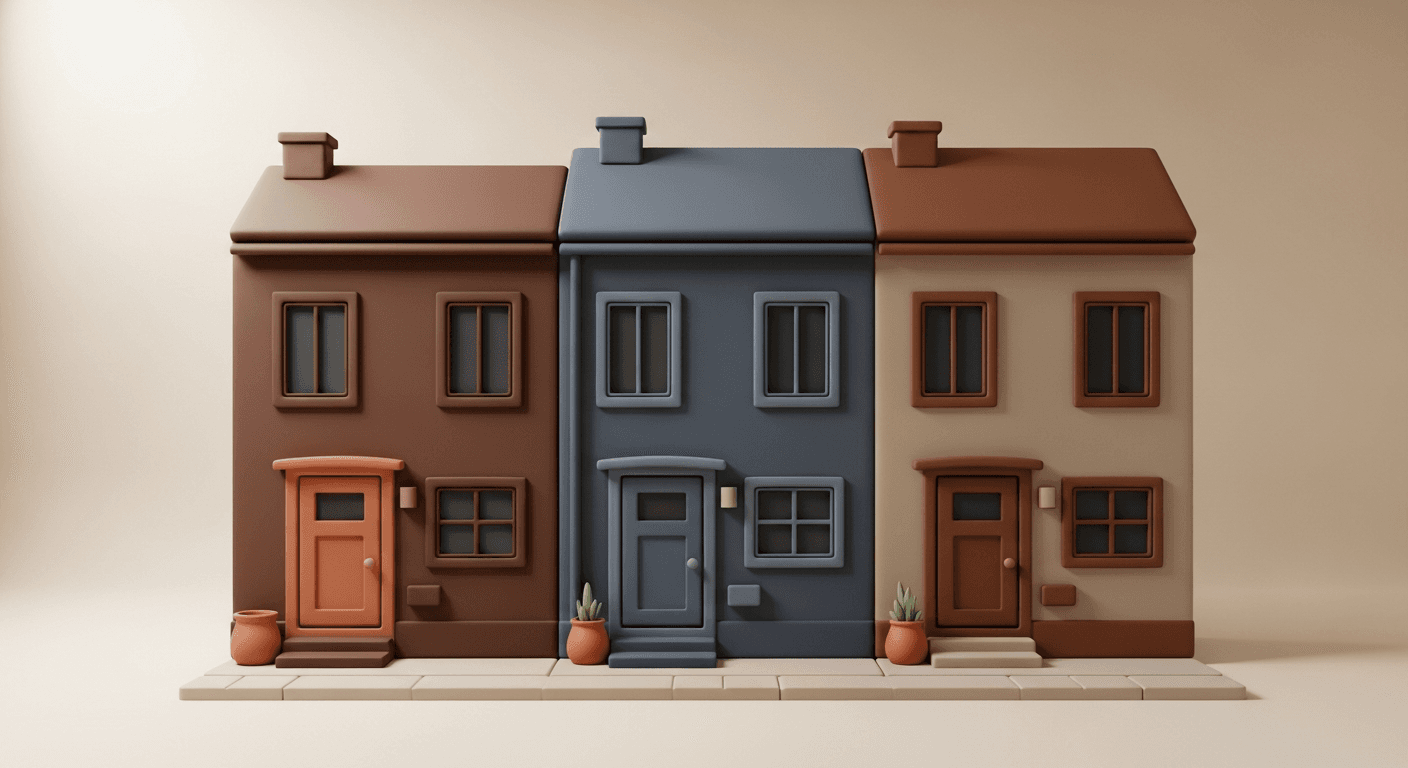 Row of clay townhouses representing Edmonton infill housing
What this means for Edmonton buyers, builders, and homeowners
For most people shopping for a home, the day-to-day impact is modest. New infill built under the 9.5 metre cap will look much like recent infill, since the majority of homes were already at or below that height. Where the change matters most is at the design stage: builders planning tall main-floor ceilings or a walk-out configuration will have less vertical room to work with and may push more of the home underground.
The city also set voluntary transition deadlines earlier in 2026 for applications that wanted to be reviewed under the old 10.5 metre limit. Those windows have now closed. According to the City of Edmonton, the final deadline, for single-detached, semi-detached, and duplex applications, was July 6, 2026. Any application decided after July 31, 2026 falls under the new 9.5 metre cap.
Edmonton Residential Market Snapshot, July 2026
If you are considering building or buying infill, it is worth understanding the broader rules that shape what can go on a lot. Our guide to secondary suites and garden suites in Edmonton covers the added-unit side of the equation, and our look at investing in Edmonton townhomes walks through the numbers on attached infill product. You can also browse current homes for sale across Edmonton to see what recent infill actually looks like, or check what your Edmonton home is worth if a redevelopment or sale is on your mind.
This is general information, not advice on a specific project. Anyone planning a build should confirm the current rules with the City of Edmonton and speak with their designer, builder, or a REALTOR® familiar with infill before making decisions.
📊 Key Stat: About 80 percent of homes built in Edmonton in 2024 and 2025 were already 9.5 metres or shorter, according to City of Edmonton staff, reported at the April 2026 council hearing.
Frequently Asked Questions
What is changing about Edmonton's infill height limit? Edmonton City Council approved lowering the maximum building height in the RS (Small Scale Residential) zone from 10.5 metres to 9.5 metres. It was approved on April 27, 2026 and takes effect for development permit applications approved on or after August 1, 2026.
When does the new 9.5 metre height limit take effect? The 9.5 metre limit took effect on August 1, 2026 and applies to development permit applications approved on or after that date. Applications decided before that date could still fall under the previous 10.5 metre limit.
Does the new limit stop three-storey infill homes? No. City staff have said three-storey homes remain possible at 9.5 metres. The reduction mainly lowers ceiling heights and pushes basements deeper rather than eliminating a full storey.
Which properties does the RS zone height limit apply to? The RS zone is Edmonton's standard small-scale residential zone, created in the 2024 Zoning Bylaw when it replaced the former RF1 through RF4 zones. It is the default small-scale residential zone across most of Edmonton's mature and established neighbourhoods, so the height cap applies broadly. Newer suburban areas can fall under different zones, so it is worth checking a specific property's zoning.
Does the change affect homes already built or permits already approved? No. The new cap applies to development permit applications approved on or after August 1, 2026. Homes already built and applications approved before the change are not affected.
🎯 The Bottom Line: Edmonton is lowering its infill height ceiling from 10.5 to 9.5 metres, and the change takes effect for permits approved on or after August 1, 2026. For most buyers and homeowners the visible impact is small, since most recent infill was already under 9.5 metres, but builders will have less vertical room and the transition windows to use the old limit have closed. If you are planning an infill project, confirm the current rules with the City of Edmonton and talk to your designer or a REALTOR® before you commit.
This article was researched and drafted with AI assistance, fact-checked against the primary sources listed below, and reviewed by the hômm editorial team before publication. Market data is live from the MLS®.

John Rota is a REALTOR® and co-founder of one of Edmonton's top-producing real estate teams, established in 2017. Born and raised in Edmonton, he studied Construction Engineering Technology at NAIT and worked in residential construction before moving into real estate, bringing a builder's eye to construction quality, renovations, and what actually drives a home's value. John writes and reviews Edmonton market and mortgage coverage for homm.ca, grounded in live MLS® data.
What's your home worth?
Get a free home valuation based on recent sales in your area.
Get Your EstimateKeep reading
Edmonton 2-Bedroom Rent Is $1,570 as Calgary's Drops 6.4%
Statistics Canada's Q2 2026 rent data put a two-bedroom apartment in the Edmonton area at $1,570 a month to advertise and to rent, below the national average and Calgary, and one of only three metro areas where asking rent did not exceed paid rent.
Canada Shed 42,000 Jobs in August 2026: The Edmonton Read
Canada lost 42,000 jobs in August 2026 and wage growth slowed to its weakest since 2017. Alberta employment eased 0.3 percent even as its jobless rate fell to 6.8 percent. Here is the Edmonton read.
Edmonton Has Alberta's Lowest Share of Homes in Flood Zones
New Statistics Canada data shows 0.8% of Edmonton homes, or 3,775 properties, sat in high flood hazard areas as of 2022, the lowest share of any Alberta region studied.
Edmonton Home Sales Fell 9.8% in August 2026 as Prices Cooled
Greater Edmonton home sales fell 9.8% year over year in August 2026 as inventory climbed 15.1% and the MLS HPI benchmark price slipped 0.6%, its first annual decline this cycle.