
What Is an RPR? Real Property Reports in Alberta
An RPR is the legal document that shows where your house, garage, fence, and deck actually sit on your lot. What it shows, how it differs from title insurance, and when to order one.

On this pageShow
Your garage sits two inches over the property line. Nobody notices until closing day, and suddenly your sale is on hold.
That's the kind of problem a Real Property Report (RPR) exists to catch. If you're buying, selling, or building in Alberta, you'll run into this document. Here's what it shows, and when you need one.
✅ Key Takeaways:
- An RPR is a legal drawing by an Alberta Land Surveyor showing your property boundaries and where buildings sit relative to them.
- A compliance certificate is the municipality's confirmation that those buildings follow the Land Use Bylaw, and it usually requires a current RPR.
- Garages, fences, and decks cause most last-minute RPR problems, because homeowners build or change them without telling a surveyor.
What a Real Property Report Actually Shows
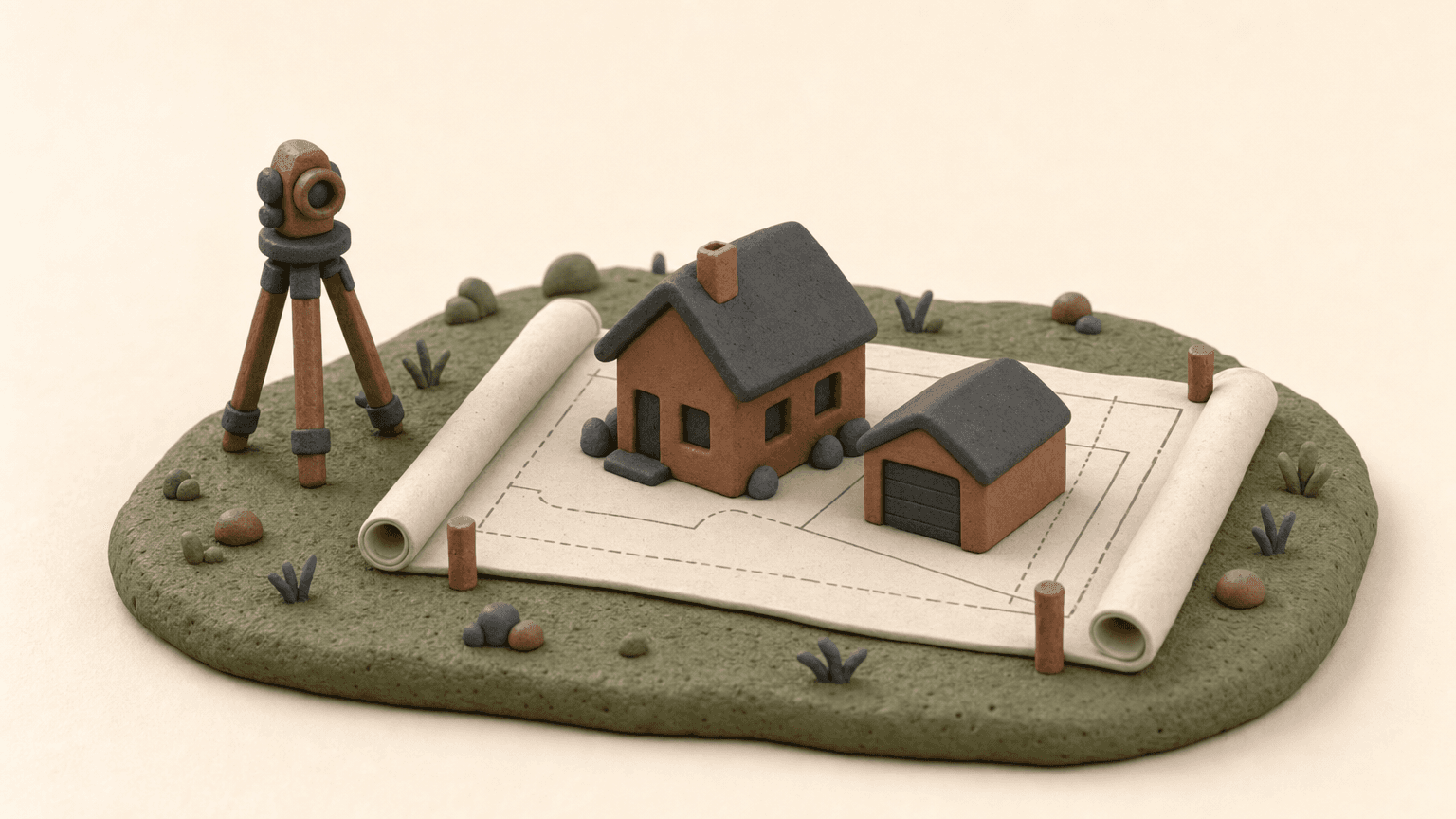
An RPR is prepared by a licensed Alberta Land Surveyor, not a home inspector or a REALTOR®. The surveyor measures the boundaries and plots every visible improvement (house, garage, shed, deck, fences), each with a measured distance to the property line.
What a Real Property Report Shows
The result is a bird's-eye map of your lot, not an opinion. It becomes outdated the moment you add or move a structure. Build a fence or garage after the survey date, and the RPR no longer matches reality. Often the original surveyor can update it rather than starting over.
RPR vs LINC vs Title: What Each One Proves
In an Alberta deal, buyers mix up three documents that each prove something different.
- Certificate of Title proves legal ownership and lists liens, easements, or caveats.
- LINC (Land Identification Numeric Code) is the unique number Land Titles assigns to your parcel. It tracks the parcel; it doesn't measure it. See our full breakdown of LINC numbers.
- Real Property Report proves where your buildings actually sit, and whether that placement follows municipal rules.
You can have a clean title and a valid LINC and still own a garage that breaks the setback rules; only an RPR catches that.
The Classic Closing Problem: Garages, Fences, and Decks
Most RPR headaches trace back to the same structures: a deck built without a permit, a fence a foot into the neighbour's yard, a garage rebuilt closer to the alley than the bylaw allows.
None of this shows up on title. It only surfaces when a surveyor measures the lot or the municipality reviews the file. Our guides on attached vs detached garages and garage types across Canada break down how setback and permit rules shift by structure type.
⚠️ Watch Out: An unpermitted structure isn't just a paperwork gap. RECA's rules treat a missing municipal permit as a "material latent defect," meaning it must be disclosed to buyers.
Compliance Certificates: Turning the RPR Into Proof
A compliance certificate is the municipality's written confirmation that your buildings meet the Land Use Bylaw. Lenders often require one, and most Alberta municipalities ask for one at sale time.
In Edmonton, you apply through the city's self-serve portal and pay the fee set in the current Planning and Development Fee Schedule. The surveyor uploads the RPR and Certificate of Title, and the city reviews it: about 10 business days regular, or 3 with express service. A flagged file can often be reapplied within six months at a reduced fee.
If a structure was built without a permit, the city may require a retroactive permit or, in some cases, an encroachment agreement. Either route needs a current RPR first.
Who Pays: Buyer vs Seller Obligations
In most Alberta resale contracts, the seller commonly provides a current RPR with evidence of compliance before closing, at their own cost. The buyer's lawyer then gets a reasonable window to review it before the transfer goes to Land Titles.
That default can change if both sides agree in writing, so confirm responsibility early, not a week from possession day.
RPR vs Title Insurance: The Trade-off
Sometimes there isn't time for a fresh survey, since surveys and compliance reviews can take weeks. Title insurance is the common workaround.
Title insurance protects against financial loss if a title or boundary problem surfaces later. It doesn't fix the issue, confirm compliance, or show what's on the ground. An RPR gives you a verified picture of the lot today. Costs vary by lot size and structure count, so compare quotes from more than one Alberta Land Surveyor.
💡 Pro Tip: Order your RPR before you list, not after you accept an offer. It gives you time to fix compliance issues, price them into the listing, or arrange an encroachment agreement quietly instead of under deadline pressure.
🎯 The Bottom Line: An RPR proves your garage, fence, and deck are actually where they're supposed to be. It's usually the seller's job to have a current one ready before closing, so order it early.
Frequently Asked Questions
How long is a Real Property Report valid in Alberta? There's no fixed expiry date, but it's outdated the moment a structure is added or changed.
What's the difference between an RPR and a survey? An RPR locates boundaries and improvements to confirm municipal compliance. A general survey may only re-establish boundary pins.
Do I need a new RPR if I just built a fence or deck? Yes, in most cases. Contact the original surveyor first; they may update the existing report instead of starting over.
What happens if my garage doesn't have the right permit? It can require a retroactive permit or an encroachment agreement. RECA treats a missing permit as a material latent defect requiring disclosure.
Can I just use title insurance instead of getting an RPR? Yes, and it's common under tight timelines. But it covers financial loss after the fact; it doesn't confirm compliance or fix a boundary problem.
Planning to sell and want to know where your home stands first? Get a free home value estimate, or talk to our team about what to line up before listing.
Sources: Alberta Land Surveyors' Association; Real Estate Council of Alberta (RECA); City of Edmonton; Strathcona County.
Sources

John Rota is a REALTOR® and co-founder of one of Edmonton's top-producing real estate teams, established in 2017. Born and raised in Edmonton, he studied Construction Engineering Technology at NAIT and worked in residential construction before moving into real estate, bringing a builder's eye to construction quality, renovations, and what actually drives a home's value. John writes and reviews Edmonton market and mortgage coverage for homm.ca, grounded in live MLS® data.
What's your home worth?
Get a free home valuation based on recent sales in your area.
Get Your EstimateKeep reading
What Is a Market Evaluation? (CMA, Explained)
Market evaluation, home evaluation, CMA, comparative market analysis: same report, different names. What is actually inside one, how sold comparables get adjusted, and when to get yours free.
How Homes Are Measured in Alberta: RMS and Square Footage
Alberta licensees must use the Residential Measurement Standard, which counts only above-grade finished space. Why a 1,200 sq ft bungalow with a finished basement is still a 1,200 sq ft home.
What Does Occupancy Mean in Real Estate? Occupancy vs Possession
Occupancy and possession date are not the same thing. The difference, why Alberta possession commonly lands around noon, and what changes when a listing shows a tenant.
Bungalow vs Semi-Bungalow: What They Mean in Alberta
Bungalow, semi-bungalow, 1.5 storey: what these terms actually mean on Alberta MLS® listings, and why bungalows often cost more per square foot in Edmonton.