
What Is a Parking Pad?
A parking pad is a hard-surfaced, uncovered off-street parking spot, usually off the rear lane in Edmonton. What it costs you in winter, what the bylaw says, and when it beats no parking at all.

On this pageShow
A parking pad is a hard-surfaced, uncovered parking space on the property, with no roof and no walls. In Edmonton it usually means a concrete, asphalt, or gravel rectangle at the back of the lot, entered straight off the rear lane. On MLS feature lists it is the most basic form of off-street parking there is, one step up from nothing.
✅ Key Takeaways:
- A parking pad is ground only: a surfaced stall, typically about 12 to 16 feet wide and 18 to 20 feet long for one vehicle.
- It matters most in winter. During Edmonton seasonal parking bans, street parking on posted routes disappears and the fine is $250; a pad keeps your car legal and off the plow route.
- Around 250 active Edmonton house listings mention a parking pad (July 2026), overwhelmingly in mature, rear-lane neighbourhoods where the garage was never built or was torn down.
What Counts as a Parking Pad
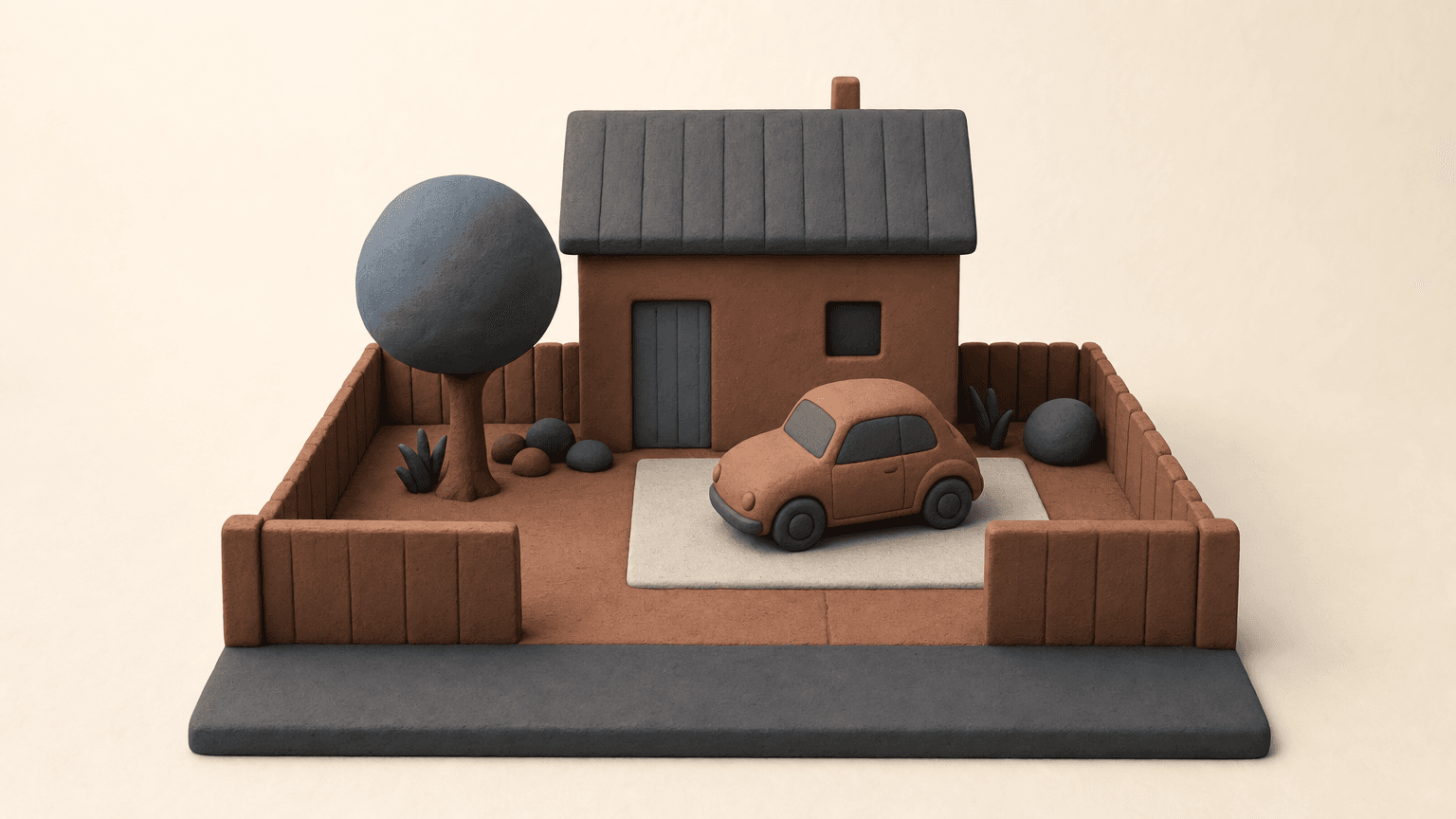
Parking Pad Site Plan
If it has a roof on posts, it is a carport. If it has walls and a door, it is a garage. A pad is the surface alone. That simplicity is the appeal: no structure to maintain, insure, or permit as a building, and the full stall depth of the yard stays open to the sky.
Concrete is the durable version, asphalt the cheaper one, and gravel the minimum that still counts as a surfaced pad. What elevates a pad in Alberta is electricity: a post with a 120V outlet for a block heater, or a 240V circuit for an EV. Natural Resources Canada says a block heater can improve fuel economy by as much as 10 percent at -20°C (put it on a timer that starts two hours before you drive), and CAA recommends plugging in below -15°C. A pad with power is a different product than a pad without.
Why Pads Exist in Edmonton
Mature Edmonton neighbourhoods were built with rear lanes, and their small original garages have been coming down for decades. Replacing a failed garage with a pad costs a fraction of a rebuild, keeps off-street parking on the title, and leaves the option of building a detached garage later. Since Edmonton removed minimum parking requirements in July 2020 (Open Option Parking), a pad is also all the parking a property legally needs, which is exactly zero more than the market demands.
The winter case is concrete: Edmonton's seasonal parking bans pull cars off posted routes so plows can work. Phase 1 clears major roads and bus routes; Phase 2 moves through residential streets neighbourhood by neighbourhood, roughly 72 hours each, with signs going up at least 24 hours ahead. Parking on the street during your neighbourhood's window risks a $250 ticket. Parking in your own driveway is explicitly allowed, and a private pad is equally off the roadway the ban targets. In January, a pad is not a luxury feature; it is where your car sleeps legally.
 Clay street with houses and autumn trees
Rules and Costs
A pad itself is surfacing work, not an accessory building, so the permit picture is lighter than for a garage. The wiring is the part with rules: any new circuit to a plug-in post or EV outlet needs an electrical permit and, practically, an electrician. If you later enclose the pad into a garage, full accessory-building rules apply: development and building permits, 4.3 m height cap, setbacks including 1.2 m for a door facing the lane.
💡 Pro Tip: Buying a home with a pad where a garage once stood? Check the Real Property Report. A demolished garage that still appears on an old RPR, or a pad poured over the property line toward the lane, both surface at closing time. An updated RPR is a cheap question to ask early.
What It Means When You Are Buying
A parking pad prices below a garage and above nothing, and about 250 of Edmonton's 6,934 active house listings mention one (July 2026). Read it two ways at once: today it is functional off-street parking; tomorrow it is the cheapest possible foundation for a garage project, because the site access and often the grading work are done. Buyers planning a garage build should measure the lot against the 20 percent accessory-building site coverage cap before assuming the upgrade path is open.
🎯 The Bottom Line: A parking pad is the minimum viable off-street parking: a surfaced, uncovered stall, usually off the lane. In Edmonton winters it earns its keep by keeping your car plugged in, snow-ban legal, and off the street. As a feature it is modest; as an option on the future of the lot, it is worth more than it looks.
Frequently Asked Questions
What is the difference between a parking pad and a driveway? A driveway leads somewhere, usually to a garage or the street connection. A pad is a destination: a standalone stall, in Edmonton typically at the rear off the lane. Front driveways in laneless suburbs do double duty as both.
How big is a parking pad? A single pad typically runs about 12 to 16 feet wide by 18 to 20 feet long (3.7 to 4.9 m by 5.5 to 6.1 m); double pads widen to about 20 feet. There is no code-set size, so measure against your actual vehicle.
Can I park on the street instead during winter? Not during a seasonal parking ban on posted routes. Edmonton's Phase 2 bans roll through residential neighbourhoods for roughly 72 hours each, and the fine is $250. Your own pad or driveway stays legal throughout.
Does a parking pad count as parking on a listing? Yes. MLS parking fields list pads as off-street parking, and in mature neighbourhoods a pad frequently is the property's entire parking answer. It is a genuine tier below a garage, and listings price accordingly.
Can I turn a parking pad into a garage later? Often, and the pad is a head start. You will need development and building permits, setbacks including 1.2 m from the lane for the door, the 4.3 m height cap, and room under the 20 percent site coverage limit for accessory buildings.
House-hunting in mature Edmonton? Search current listings or see the full garage and parking guide.
MLS figures are live Edmonton data as of July 2026. Parking ban, permit, and zoning facts are from City of Edmonton sources; block heater guidance from Natural Resources Canada and CAA.

John Rota is a REALTOR® and co-founder of one of Edmonton's top-producing real estate teams, established in 2017. Born and raised in Edmonton, he studied Construction Engineering Technology at NAIT and worked in residential construction before moving into real estate, bringing a builder's eye to construction quality, renovations, and what actually drives a home's value. John writes and reviews Edmonton market and mortgage coverage for homm.ca, grounded in live MLS® data.
What's your home worth?
Get a free home valuation based on recent sales in your area.
Get Your EstimateKeep reading
What Is a Market Evaluation? (CMA, Explained)
Market evaluation, home evaluation, CMA, comparative market analysis: same report, different names. What is actually inside one, how sold comparables get adjusted, and when to get yours free.
How Homes Are Measured in Alberta: RMS and Square Footage
Alberta licensees must use the Residential Measurement Standard, which counts only above-grade finished space. Why a 1,200 sq ft bungalow with a finished basement is still a 1,200 sq ft home.
What Does Occupancy Mean in Real Estate? Occupancy vs Possession
Occupancy and possession date are not the same thing. The difference, why Alberta possession commonly lands around noon, and what changes when a listing shows a tenant.
Bungalow vs Semi-Bungalow: What They Mean in Alberta
Bungalow, semi-bungalow, 1.5 storey: what these terms actually mean on Alberta MLS® listings, and why bungalows often cost more per square foot in Edmonton.